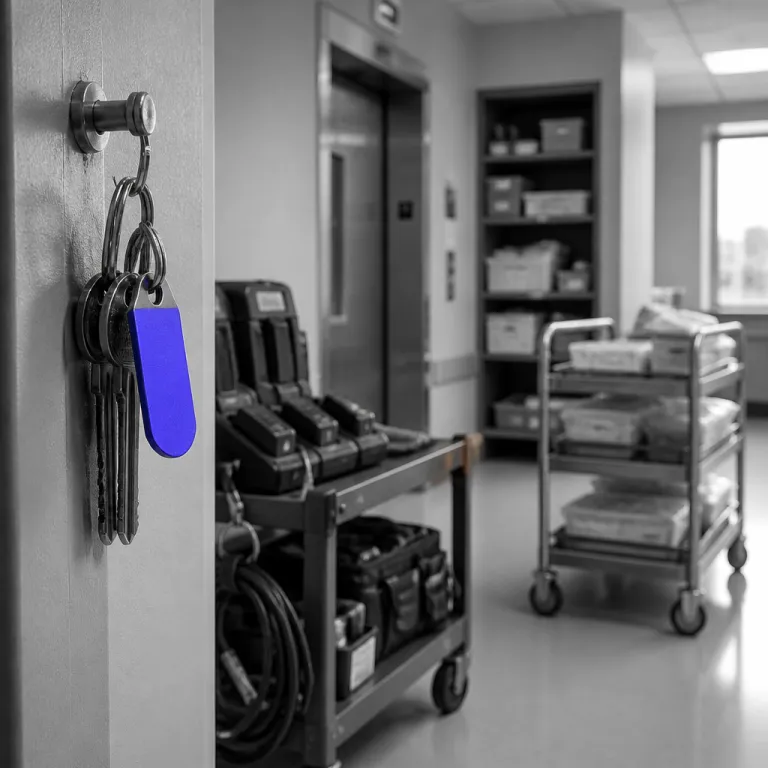
Why MSP staffing matters for Piedmont Columbus maintenance jobs
Piedmont Columbus maintenance jobs sit at the intersection of hospital safety and reliable infrastructure. These roles are crucial for providing the stable environment that clinicians need to perform complex procedures and that patients need to feel secure during care. For any managed service provider that handles talent sourcing, understanding how maintenance teams interact with clinical operations at Piedmont Columbus Regional Midtown and Northside in Columbus, Georgia is non-negotiable.
In a large health system such as Piedmont in Columbus, open positions in maintenance affect everything from patient services to physician practice schedules, because a single broken sterilizer or lift can disrupt entire practice locations. MSP staffing partners that specialise in healthcare must map how clinicians interact with facilities, how technology-based systems monitor equipment, and how support clinicians rely on maintenance teams to provide rapid, safe responses. When MSP experts analyse Piedmont Columbus maintenance jobs, they look at each job as part of a network of roles crucial to providing care across the Piedmont system, not as isolated technical tasks.
For candidates, this means a maintenance career in Columbus, Georgia is not just about tools and checklists. It is about joining a team that is directly providing care through reliable power, clean air, and safe equipment, while gaining hands-on experience with hospital-grade systems that few other employers can match. As one long-tenured technician at Piedmont Columbus Regional Midtown described it, “I may not be at the bedside, but every repair I finish on time keeps a nurse focused on the patient instead of the equipment.” People who want to learn how patient services depend on engineering support quickly see that these maintenance positions are engaging roles where they interact with technology daily and support clinicians by keeping every clinical space ready.
Talent sourcing for maintenance roles in a clinical environment
Managed service providers that recruit for Piedmont Columbus maintenance jobs must balance technical skills with an understanding of clinical workflows. A candidate who can perform complex repairs but cannot coordinate with nursing leaders or physician practice managers will struggle in these roles that are crucial to hospital operations. Effective MSP staffing programmes in Columbus, Georgia therefore design sourcing strategies that highlight both engineering competence and the ability to succeed in roles that sit close to patient care.
Specialised recruiters map every maintenance job to specific practice locations, clinical departments, and patient services, then use that map to prioritise open positions that carry the highest safety risk if left vacant. When MSP consultants analyse Columbus job market data, they compare it with hiring patterns in other healthcare hubs and with regional trends in managed staffing, as discussed in resources on hiring trends in MSP staffing and talent sourcing. This structured approach helps them provide Piedmont with realistic timelines, salary benchmarks, and growth opportunities for maintenance team members.
For job seekers, this means that applying through an MSP partner can open a clearer path into a healthcare career, even if their background is in industrial or commercial maintenance. Recruiters can help candidates learn how clinicians interact with building systems, explain why patient safety protocols matter for every maintenance task, and show how hands-on experience in a hospital can lead to advanced technical or leadership positions. People who want to learn nursing or move into clinical support later often use maintenance roles as a first step into care at Piedmont facilities, gaining exposure to clinical teams while still working in their core trade.
Building multidisciplinary teams that support clinicians and patients
MSP staffing for Piedmont Columbus maintenance jobs is ultimately about building a cohesive équipe that understands its shared responsibility toward patients. Maintenance technicians, biomedical engineers, and facilities coordinators become team members in the broader clinical ecosystem, not just back-office staff. When MSP partners design workforce plans, they align maintenance positions with nursing units, physician practice groups, and patient services so that everyone knows who supports whom.
In practice, this means scheduling maintenance shifts to mirror peak clinical activity, assigning specific technicians to defined practice locations, and training them to interact with technology systems that clinicians use daily. A technician who regularly supports an intensive care unit, for example, must understand how support clinicians rely on uninterrupted power, stable oxygen delivery, and precise temperature control to provide safe care. Piedmont Columbus Regional has publicly highlighted its investments in modernising critical care and surgical spaces in recent years, and multidisciplinary maintenance teams play a central role in keeping those upgraded environments reliable for patients in Columbus, GA.
For candidates, joining such a team means more than securing a stable job in Columbus. It offers a chance to learn how patient services operate, to see how clinicians interact with complex equipment, and to understand why every maintenance task is crucial for providing a safe environment. Many technicians later move into supervisory positions, safety roles, or even clinical support pathways, using their hands-on experience at care-focused Piedmont facilities as a foundation for long-term career growth opportunities.
Safety, compliance, and performance in hospital maintenance staffing
Every MSP that supports Piedmont Columbus maintenance jobs must treat safety and regulatory compliance as core performance metrics, not administrative afterthoughts. Hospitals in Columbus, Georgia operate under strict accreditation standards that govern everything from fire doors to medical gas systems, and maintenance teams are central to meeting those requirements. When MSP staffing partners design job descriptions, they embed safety responsibilities into each role so that technicians know exactly which checks they must perform and document.
For example, a maintenance job that covers sterilisation equipment will specify how often the technician must perform preventive inspections, how they should interact with technology-based monitoring tools, and how they must coordinate with nursing and clinical leaders. MSP programmes track these tasks through digital systems so that team members can provide auditable records, and so that support clinicians can see when equipment is safe to use. This structured approach turns maintenance positions into roles that are crucial for accreditation, patient safety, and uninterrupted clinical care.
Candidates who value structure and accountability often thrive in this environment, because they can learn clear protocols and see the direct impact of their work on patients. They gain hands-on experience with safety audits, emergency drills, and cross-functional coordination, which strengthens their career prospects both within care at Piedmont facilities and across other healthcare locations. Over time, technicians who excel in safety-focused maintenance roles often move into leadership positions that oversee open positions, mentor new hires, and shape how patient services are supported across the hospital network.
Technology, data, and the future of maintenance careers in Columbus
Modern MSP staffing for Piedmont Columbus maintenance jobs increasingly revolves around technology and data-driven planning. Hospitals in Columbus, Georgia now use building management systems, sensor networks, and predictive maintenance tools that let clinicians interact with facility status dashboards in real time. Maintenance technicians must therefore be comfortable with software interfaces, digital work orders, and technology-enabled platforms that connect them directly with clinical teams.
For MSP partners, this shift means sourcing candidates who can both perform traditional mechanical tasks and engage with technology systems that track performance, safety, and downtime. Recruiters look for people who want to learn new tools, who see data as a way to improve the delivery of care, and who are ready to take on roles that sit at the boundary between engineering and clinical operations. Articles on rate card benchmarking in a flat market show how MSP programmes negotiate for the right skills mix, and the same negotiation logic applies when defining salary bands for technology-enabled maintenance positions.
For job seekers, this evolution opens new growth opportunities beyond traditional maintenance career paths in Columbus. Technicians who gain hands-on experience with digital monitoring tools, asset management systems, and remote diagnostics can move into roles that design maintenance strategies for multiple locations, or that train other team members in best practices. People who enjoy both practical work and problem solving with data will find that care at Piedmont facilities offers a rich environment to learn, adapt, and build a long-term career that stays aligned with how patient services are changing.
How candidates can position themselves for Piedmont Columbus maintenance roles
People aiming for Piedmont Columbus maintenance jobs should approach the process as a structured career move into healthcare, not just another technical position. MSP staffing partners advise candidates to highlight any experience that shows they can perform under safety protocols, coordinate with diverse teams, and support clinicians indirectly through reliable infrastructure. Even if your background is in manufacturing or commercial buildings, you can translate that experience into the language of patient services and clinical support.
Start by mapping your previous job tasks to the realities of Columbus, Georgia hospitals, such as maintaining critical systems, responding quickly to urgent requests, and documenting work thoroughly. Emphasise any situations where you helped provide a safe environment for occupants, because those stories show how you understand the roles that are crucial to providing care at Piedmont facilities. When you speak with MSP recruiters, ask to learn more about specific practice locations, open positions, and how clinicians interact with maintenance teams, so you can tailor your applications to each job.
Once hired, treat every day as an opportunity to learn nursing workflows, understand how physician practice schedules depend on equipment uptime, and see how technology-enabled platforms connect you with team members across locations. The more you engage in roles that touch both engineering and clinical operations, the more you will build hands-on experience that sets you apart in the Columbus job market. Over time, this approach turns a single maintenance job into a resilient healthcare career that supports patients, clinicians, and the wider community.
Key figures on MSP staffing and hospital maintenance roles
- According to the American Hospital Association, hospitals and health systems in the United States employ more than 6 million people, and facilities and maintenance roles represent a significant share of non-clinical staff, which shows how large the talent pool is for MSP programmes that support hospital infrastructure. This figure is based on national workforce data reported by the AHA in its annual fact sheets.
- Data from the U.S. Bureau of Labor Statistics indicate that employment for general maintenance and repair workers is projected to grow faster than the average for all occupations, reflecting ongoing demand for technicians who can support complex facilities such as hospitals in regions like Columbus, Georgia. The BLS Occupational Outlook Handbook provides the underlying projections for this trend.
- Studies on healthcare-associated infections from the Centers for Disease Control and Prevention highlight that improved environmental cleaning and equipment maintenance can reduce infection rates, which underlines how maintenance teams are crucial for providing a safe environment for patients and clinicians. CDC research on infection prevention and control offers the primary evidence for this connection.
- Industry surveys on managed service providers in healthcare staffing show that organisations using MSP models often achieve double-digit percentage reductions in time to fill for critical roles, which is particularly important when hospitals need to address open positions in maintenance quickly to protect patient safety. These surveys typically analyse vendor-neutral MSP programmes across multiple health systems.
- Reports on healthcare capital spending indicate that hospitals are investing heavily in building automation and digital monitoring systems, which increases demand for maintenance technicians who can work with technology platforms and support clinicians by keeping these systems reliable. Recent public updates from Piedmont Columbus Regional on facility enhancements align with this broader national trend toward smarter infrastructure.
FAQ about MSP staffing and Piedmont Columbus maintenance jobs
How does MSP staffing change the hiring process for Piedmont Columbus maintenance jobs ?
MSP staffing centralises recruitment for Piedmont Columbus maintenance jobs under a single coordinated programme that manages suppliers, job postings, and candidate screening. This structure shortens time to fill open positions, improves consistency in safety and skills requirements, and gives candidates a clearer point of contact throughout the hiring process. For the hospital, it also provides better data on workforce needs across different locations and practice areas.
What skills are most important for maintenance roles in a hospital setting ?
Technical competence in electrical, mechanical, or HVAC systems remains essential, but hospitals also prioritise safety awareness, documentation discipline, and the ability to work closely with clinical teams. Candidates must be able to perform under pressure, follow strict protocols, and understand how their work affects patient services and clinician workflows. Familiarity with digital work order systems and building management technology is increasingly valuable.
Can someone without healthcare experience move into Piedmont Columbus maintenance jobs ?
Yes, many technicians transition from industrial, commercial, or residential maintenance into hospital roles through MSP staffing programmes. Recruiters help candidates translate their previous experience into healthcare language, focusing on safety, reliability, and responsiveness. Once hired, structured onboarding and on-the-job training expose them to clinical environments, patient safety standards, and the specific systems used in Columbus, Georgia hospitals.
How do maintenance teams support clinicians and patients indirectly ?
Maintenance teams ensure that critical systems such as power, water, air handling, and medical gas remain reliable, which allows clinicians to focus on providing care without worrying about infrastructure failures. They also maintain lifts, sterilisation equipment, and environmental controls that directly affect patient comfort and safety. By responding quickly to issues and preventing breakdowns, they play a quiet but central role in the overall quality of patient services.
What career growth opportunities exist for maintenance staff in healthcare ?
Maintenance staff in hospitals can progress into supervisory roles, safety and compliance positions, or specialised technical tracks such as biomedical equipment support. Those who gain hands-on experience with digital monitoring tools and cross-departmental coordination may move into facilities management or regional roles overseeing multiple locations. Some also transition into broader operational leadership, using their deep understanding of how infrastructure supports clinical care to guide strategic decisions.
